

By Ron Bruni
When “born from above,” a transformation occurs. We don’t crave the things we used to crave. Sin doesn’t have the same taste, we don’t want what we knew before. Love for God becomes natural, not forced, because you realize life without Him is unnatural. This is what it means to let Christ reign. When we surrender our need to be in control and let Christ be Lord, then we experience transformation.
Tuesday of the Second Week of Easter
Acts 4:32-37
John 3:7-15
The readings for this week were taken from the Acts of the Apostles, Psalm 93, and John’s Gospel. Apparently, the unifying theme through all three readings is that God’s reign brings about new birth in a new community.
As I was meditating on these scripture passages, I thought about how who we are right now is not our ultimate expression. When our God grants new birth through his son, Jesus, we become new, transformed people who display characteristics of his kingdom here on Earth.
The reading from Acts shows us what a Christian community should look like. They are united, giving, led by the Spirit, and concerned with serving others. There is a man named Barnabas who is selling a piece of property he owns. His name means “son of encouragement.” Instead of keeping his profit, he gives the entire amount to the community. Barnabas becomes an example of encouragement through generosity and selflessness.
We see more than friendship here; we see unity in the Spirit, where people truly care for one another. Moreover, this carries over into how faith impacts our daily interactions with others. People become one in heart and mind. They no longer cling to their possessions; instead, they live lives of radical generosity and community. They don’t force this kind of behavior on one another because their hearts have changed.
Psalm 93 states that the Lord reigns; he is mighty, he is forever, and he will prevail over the chaos — a strong, direct statement that serves as our baseline, clearly affirming that God is in control. Our fears and circumstances do not reign over us.
The gospel reading from John’s third chapter reveals the heart of our message for today. Imagine the situation, if you will. Nicodemus was a Pharisee, which is like a hard-line religious teacher. He was also a member of the Jewish ruling council, the Sanhedrin. He was educated, esteemed, and religious, and looked “right” on the outside. Nicodemus had heard about this man, Jesus, and wanted to know more about him. He decided to visit Jesus at night so he would not shame himself before the other members of the Sanhedrin.
Nicodemus begins by telling Jesus that he knows He is from God, and it seems like he is eager to hear what Jesus has to say. Jesus tells Nicodemus, “You must be born from above.”
Nicodemus was confused by this because he was thinking in physical terms. Jesus then explains that we need to be born of the Spirit, not of the flesh. In other words, Jesus is telling Nicodemus that religion isn’t enough; you need to have a new life. Nicodemus had a position but needed purpose; he had knowledge but needed wisdom; he had religion, but needed a relationship. Basically, you can be good, educated, and religious but still spiritually dead inside!
So, where does this leave us today? We need life. Something that doesn’t just make us do better but makes us desire to be better. Jesus brings a spiritual birth that changes us from the inside out. When we are born “from above” or born again, God does in us what we could never do for ourselves, and we live evidence of a life we didn’t create.
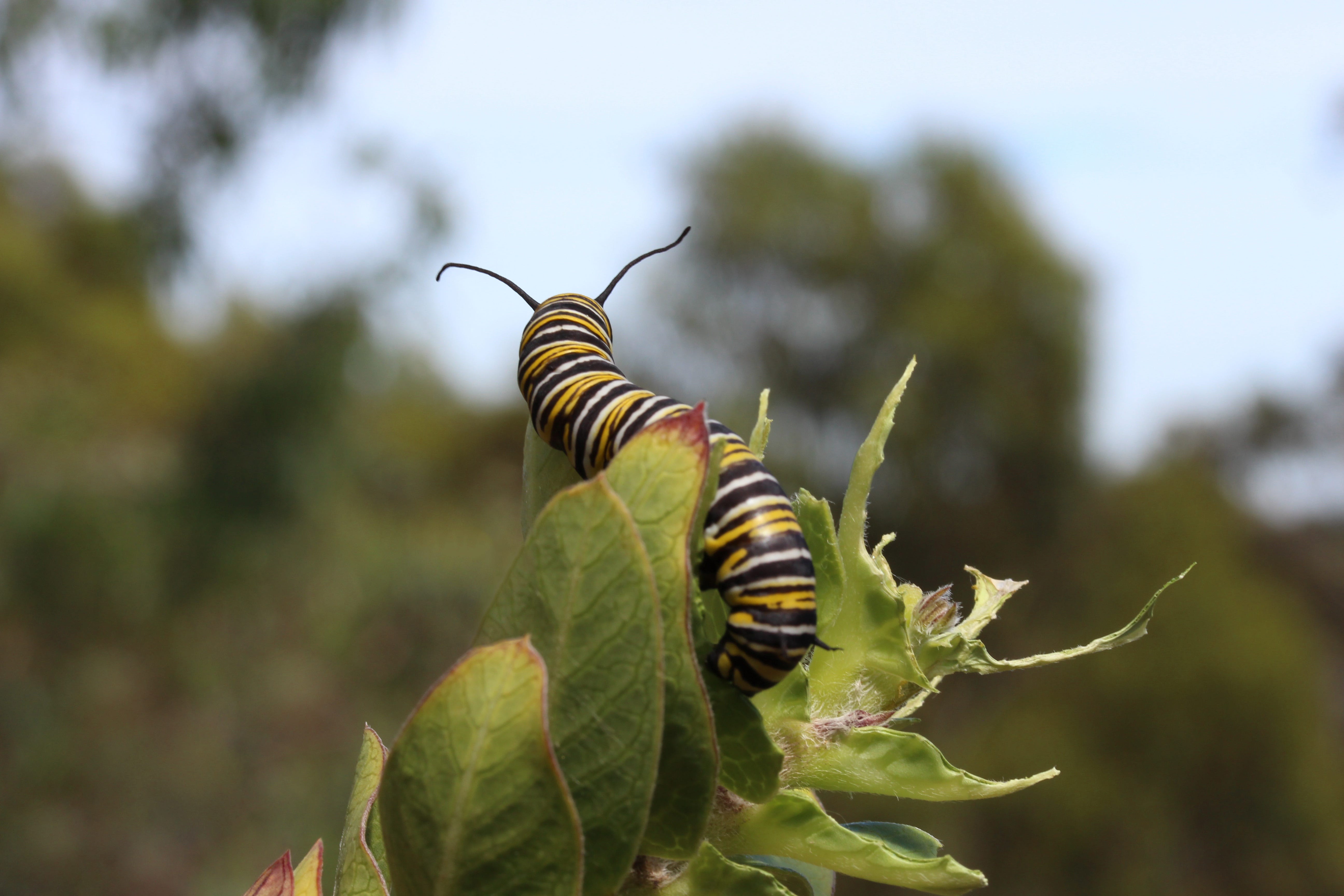
I love a good metaphor, so here is one for you. Imagine a caterpillar crawling along on a branch. It spends its life eating leaves on this branch, living to satisfy its appetite. It can’t get off the branch; it’s bound to it. Many times, this is life before we are born again. We are alive, but spiritually we may be stagnated. We are driven by our appetites. Money, success, approval, comfort, control. We usually can’t live above it.
Nicodemus wasn’t sinful by our standards. He was, however, bound to living a natural life in his profession. While the caterpillar is busy crawling along, eating whatever it can find, it begins wrapping itself in a cocoon. When it’s in that cocoon, it doesn’t just improve its life; It transforms into something totally different.
We try to better ourselves daily by trying harder, white-knuckling it, changing habits and behaviors. We try to be better caterpillars. But Jesus never said, “Try harder.” He said, “You must be born from above.” God doesn’t teach a caterpillar how to live on a branch; He transforms them into something new. You can’t crawl on a branch and fly at the same time. When the caterpillar enters that cocoon, it stops trying to survive by itself. That, my friends, is surrender.
On the outside, the caterpillar seems lifeless, but on the inside, God is making radical changes that will alter its existence from now on. In an analogous way, we too undergo “radical changes” when we are “born from above.” That will alter our lives forever. When this transformation occurs, we don’t crave the things we used to crave. Sin doesn’t have the same taste, we don’t want what we knew before. Love for God becomes natural, not forced, because you realize life without Him is unnatural. This is what it means to let Christ reign. When we surrender our need to be in control and let Christ be Lord, then we experience transformation.
I researched how other denominations defined “born again” and I found that whether you attend church in a majestic cathedral, in a humble country chapel, or at home in your seat cushioned living room alone, what we believe at the heart of Christianity doesn’t change — to be born again is to allow God to make you new, starting on the inside.
It’s not about how you worship but how you have been worshiped over by God. It is not confined to a singular moment, method, or formula either. Some are born again in a sudden realization, like a lightbulb flipping on. Others slowly mature like the rising sun peeking over the horizon. But in every case, something authentic shifts.
Though different Christian traditions express it in various ways, they all point to the same fundamental transformation. Being born again is the difference between knowing about Jesus and knowing Jesus. Regardless of our denomination, we know it by its fruit.
Just like a caterpillar does not just grow wings and become a butterfly, our lives are changed on the inside out, not from the outside in. And just as no two butterflies come out of their cocoon in the same way or at the same time, no two Christians work out their faith identically. But we can all agree where it starts: With God changing our hearts.
To be born again is not about trying harder to be religious. It’s about wanting more of life. Life comes only when we stop trying to bootstrap ourselves and receive it from the One who gave it all for us. And maybe that is the invitation extended to each of us, regardless of where we were born or what church we stand under.
Maybe growing into who we were meant to be has less to do with trying. Maybe it has more to do with learning to let God be God, day by day. Stop trying harder. Allow ourselves to be made new.