

By Tim Trainor
The basic message of the Parable of the Great Banquet is this: The tragedy of the Jewish rejection of Christ has opened the door of salvation to us, the Gentiles. The blessings of the kingdom are now available to all who are living in a state of Grace because they have repented and come to Christ through faith.
Tuesday of the Thirty-first Week in Ordinary Time
Philippians 2:5-11
Psalm 22:26b-27, 28-30ab, 30e, 31-32
Luke 14:15-24
Our Gospel reading this morning is from Luke — “The Parable of the Great Banquet.” It is similar to the Parable of the Wedding Feast in Matthew 22:1-14, but with some significant differences.
Luke tells this story at a dinner Jesus attended. Jesus had just healed a man with dropsy and taught a brief lesson on serving others. Jesus then says that those who serve others “will be repaid at the resurrection of the righteous.” See Luke 14:14. At the mention of the resurrection, someone at the table with Jesus said, “Blessed is the man who will eat at the feast in the kingdom of God” (verse 15). In reply, Jesus tells this Parable of the Great Banquet.
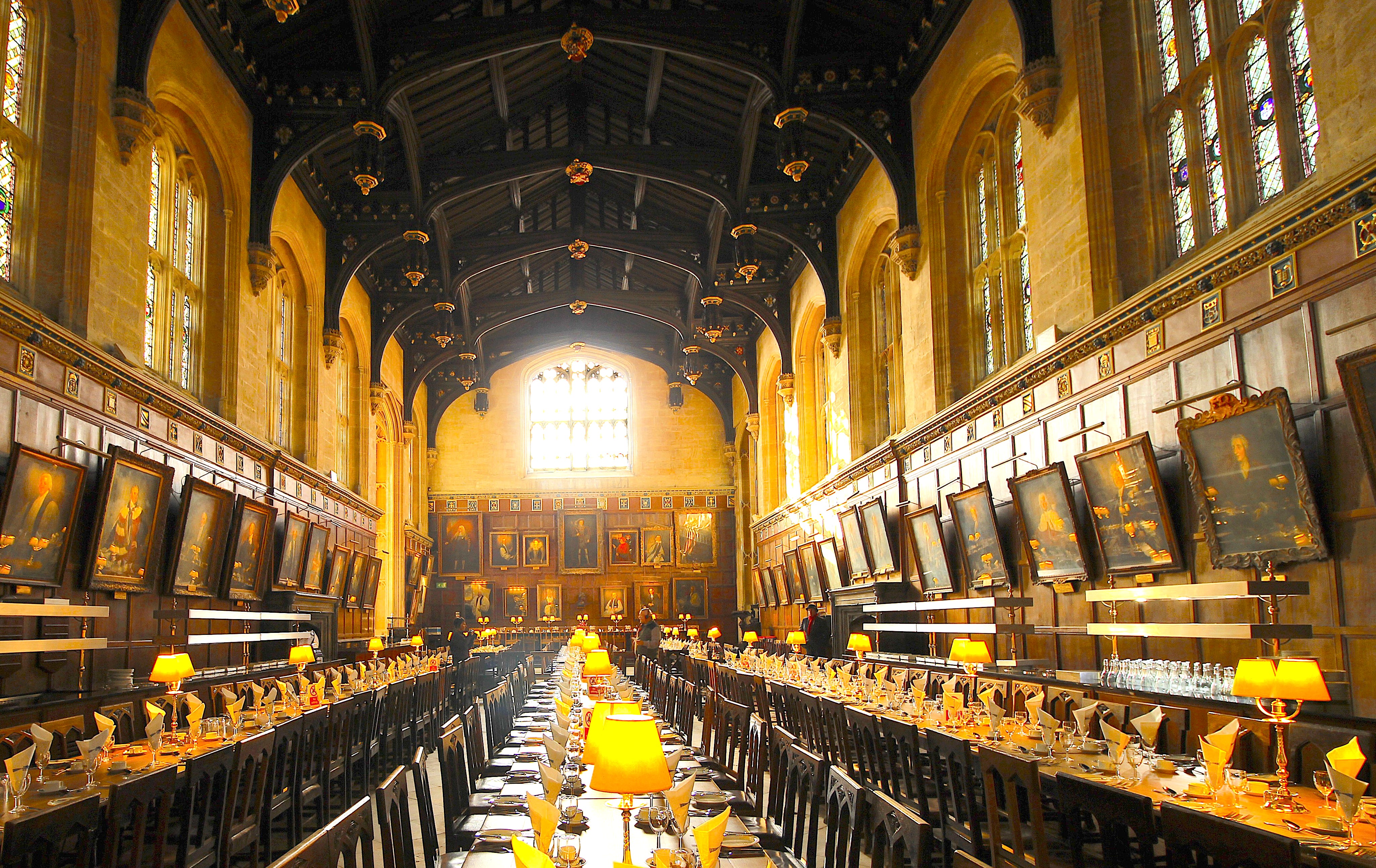
Jesus teaches us at least five hard truths to shatter our comfortable assumptions about God’s grace and the salvation that He offers. A central theme in many Catholic reflections on this passage is the dynamics between divine invitation and human excuses. To me, they emphasize that the ultimate tragedy is not God’s exclusion of us, but our own, all too often, self-initiated exclusion of ourselves from God’s graces.
1. Let’s start with the first of these five hard truths by examining the Excuses that Jesus said we all too often use. In the parable, when the host sends out his servants to tell the invited guests the feast is ready, they all begin to make “Worldly Distractions” as excuses for their unavailability. One has bought a field and needs to inspect it. Another has purchased five yoke of oxen and needs to try them out. A third has just married a wife and says, “I cannot come.” Catholic commentators point out that none of these activities are sinful in themselves. But the reflections warn against the “tyranny of the good” — letting the ordinary “good” cares, possessions, and relationships of the world dull our hunger for higher & greater eternal things.
So, when the master of the house heard these flimsy but “good” excuses, he was angry. He told his servant (who represents the Holy Spirit) to forget the guest list and go into the back streets and alleyways of the town and invite “the poor, the crippled, the blind and the lame” (verse 21). After the servant brought in the down-and-out townspeople, room still remained in the banquet hall. So the master sent his servant on a broader search: “Go out to the roads and country lanes and make them come in, so that my house will be full” (verses 22-23).
Jesus ends the parable by stating that the master is determined that “not one of those men who were invited will get a taste of my banquet” (verse 24).
The statement that prompted the parable is key to unraveling and interpreting it. The man who, in verse 15, looks forward to dining in the Messianic kingdom probably subscribed to the popular notion, at that time, that only Jews, which he was, would be part of that kingdom. The parable Jesus then tells is aimed at debunking that notion, as the following explanation makes clear: The master of the house is God, and the great banquet is the kingdom, a metaphor that was suggested by the speaker at the table. The invited guests picture the Jewish nation. The kingdom was prepared for them, but when Jesus came preaching that “the kingdom of heaven is near” (Matthew 4:17), they rejected Him. “He came to that which was his own, but his own did not receive him” (John 1:11).
The excuses for skipping the banquet are laughably bad. No one buys land without seeing it first, and the same is true for buying oxen. And what, exactly, would keep a newly married couple from attending a social event? All three excuses in the parable reveal the insincerity of those invited. The interpretation is that the Jews of Jesus’ day had no valid excuse for spurning Jesus’ message; in fact, they had every reason to accept Him as their Messiah.
The detail that the invitation is then opened up to society’s maimed and downtrodden is important. These were the types of people that the Pharisees considered “unclean” and under God’s curse (see John 9:1-2 & 34). Jesus, however, taught that the kingdom was available even to those considered “unclean” (cf. Acts 10). His involvement with tax collectors and sinners brought condemnation from the Pharisees, yet it showed the extent of God’s grace (Matthew 9:10-11). The fact that the master in the parable sends the servant far afield to persuade everyone to come indicates that the offer of salvation would be extended to the Gentiles and “to the ends of the earth’ (Acts 1:8). “Rejoice, O Gentiles, with his people” [that is, the Jews] (Romans 15:10).
Did you catch that the master appears to be not at all satisfied with a partially full banquet hall? He wants every place at every table to be filled. This fact has caused many to comment: “God is more willing to save sinners than are many sinners to be saved.”
Those who ignored the invitation to the banquet chose their own punishment—they missed out. The master thus respects their “free will’ choice by making it permanent: they would not “taste of my banquet.” So it will be with God’s judgment on those who choose to reject Christ. They will have their own choice confirmed, and they will never taste the joys of heaven.
2. Next, let's look at the implied connections between the Eucharistic Banquet, which is a “type” that parallels The Great Banquet in our Gospel reading. For us Catholics, this banquet is not just a metaphor for a far-off heaven; it directly represents the Last Supper. In the Liturgy of the Eucharist, every day, Christ the Host invites us, the faithful, to His table to partake of the heavenly bread. This daily choice includes reflecting on Scripture, which challenges us to examine the weekly or daily excuses we give for missing Mass or neglecting deeper daily Scripture reading and prayer. We often prioritize our own “fields and oxen” (work, exhaustion, chores) over God's daily, living presence.
3. This Parable helps us better see salvation history and the radical inclusiveness of God’s love. I believe that it does by citing the master’s reaction to being rejected as “holy anger,” which swiftly turns into an outpouring of unexpected mercy. He commands his servants to bring in “the poor, the crippled, the blind, and the lame,” and eventually to compel those on the “highways and hedgerows” to enter so that his house may be filled. This reflects the historic pivot from Israel to the Gentiles, whom theologians view as the initial invitees. But as the religious leaders of Israel reject Christ, the outcasts and outsiders represent the Gentiles, and sinners are the ones who then welcome the Gospel. That’s us. This underscores the Gospel’s theme of universal inclusion. God’s grace is not an entitlement based on status, legal purity, or lineage. It is a free gift that requires humility.
4. The urgency of “Now!” The master instructs his servant to “compel” people to come in. Catholic reflections note that this does not mean forced conversion, but rather the urgent, loving persistence of evangelization. God’s desire to share His joy is intensely urgent.
5. Lastly, the parable ends with a stark warning: “None of those men who were invited shall taste my dinner.” (verse 24) This highlights that while God’s mercy is boundlessly wide, it respects our free will! If we consistently choose our own distractions over His friendship, He will ultimately grant us the isolation which we have so freely chosen. So, beware of over-choosing worldly distractions.
Thus, in summary, the basic message of the Parable of the Great Banquet could be stated as: The tragedy of the Jewish rejection of Christ has opened the door of salvation to us, the Gentiles. The blessings of the kingdom are now available to all who are living in a state of Grace because they have repented and come to Christ through faith.
This inclusion of the Gentiles should not surprise us, as it is a fulfillment of Hosea 2:23, where we read: “I will say to those called ‘Not my people,’ ‘You are my people’; and they will say, ‘You are my God.’” God is “not willing that any should perish but that all should come to repentance” (2 Peter 3:9), and “Everyone who calls on the name of the Lord will be saved” (Romans 10:13).
In our Philippians reading, we find these four key themes in Catholic spirituality:
1. First, the mindset of Christ, whereby in Catholic teaching, we believe that Paul commands us to “have among yourselves the same attitude that is also in Christ Jesus” (Phil 2:5), is a call to radical selflessness, rejecting worldly ambition, pride, and entitlement. It thus calls the faithful to imitate Christ’s servant heart within their family, community, and local Church.
2. Next, for each of us to unite our sufferings with the Crucified Christ. The writings of the Church Fathers frequently encourage believers to unite their personal trials, illnesses, or daily humiliations with the Passion of Christ. Just as glory followed Christ’s surrender on the Cross, a Christian’s suffering is viewed not as meaningless but as redemptive when joined to Christ’s sacrifice.
3. Thirdly, these verses have a very strong Eucharistic context, so they are used as the classic second reading (Epistle) for Palm Sunday (Passion Sunday) and feasts of the Holy Cross. It mirrors the Eucharistic mystery: That is, Christ humbles Himself under the simple appearance of bread and wine, just as He humbled Himself in the Incarnation.
4. Lastly, portions of it are used in the Rosary and Veneration of the Holy Name. Here, Catholics frequently meditate on the closing lines—where every knee bows at the name of Jesus—thereby connecting the passage to the devotional practice of honoring the Holy Name of Jesus and praying the Rosary to anchor the believer’s heart in Christ’s mystery from His Incarnation to His Glorious Ascension.
I would like to wrap up my Reflection this morning by reviewing a major teaching found in our Philippians reading that also appears in Catholic Doctrine: “The Pre-existence and Divine Nature of Christ,” drawn from verse 6: “Though he was in the form of God.” The Catechism teaches that this phrase means Jesus is truly and eternally God, sharing the divine nature with the Father. He did not “seize” or exploit His equality with God, because it belonged to Him by nature. CCC 464–469 affirms Christ's full divinity and the mystery of the Trinity.
We hear the fruits of this teaching when, in each Mass we attend, we say: “… the Son of God is consubstantial [a Greek word meaning same form/substance] with the Father” in the Creed.