


By Lou Occhi
On Sunday morning, Mary Magdalen and some other women came to the tomb; Mary, the mother of Jesus, was not there. Some speculate that Jesus had appeared to her earlier that morning. It is a lovely thought, and certainly, if He were to appear to anyone first, it would be His mom.
Memorial of Our Lady of Sorrows
1 Corinthians 12:12-14, 27-31
Psalm 100:1b-2, 3, 4, 5
Luke 2:33-35
I want to begin by making a small disclaimer. Mary, the mother of Jesus, is human just like us. She is not a god. However, she is a perfect creation of God. Our Father in heaven would have wanted a perfect vessel to bring His Son into the world. Remember, when the angel appeared to Mary, he addressed her as “Hail, Full of Grace.” The only way a person can be full of grace is to be free of all sin, including original sin.
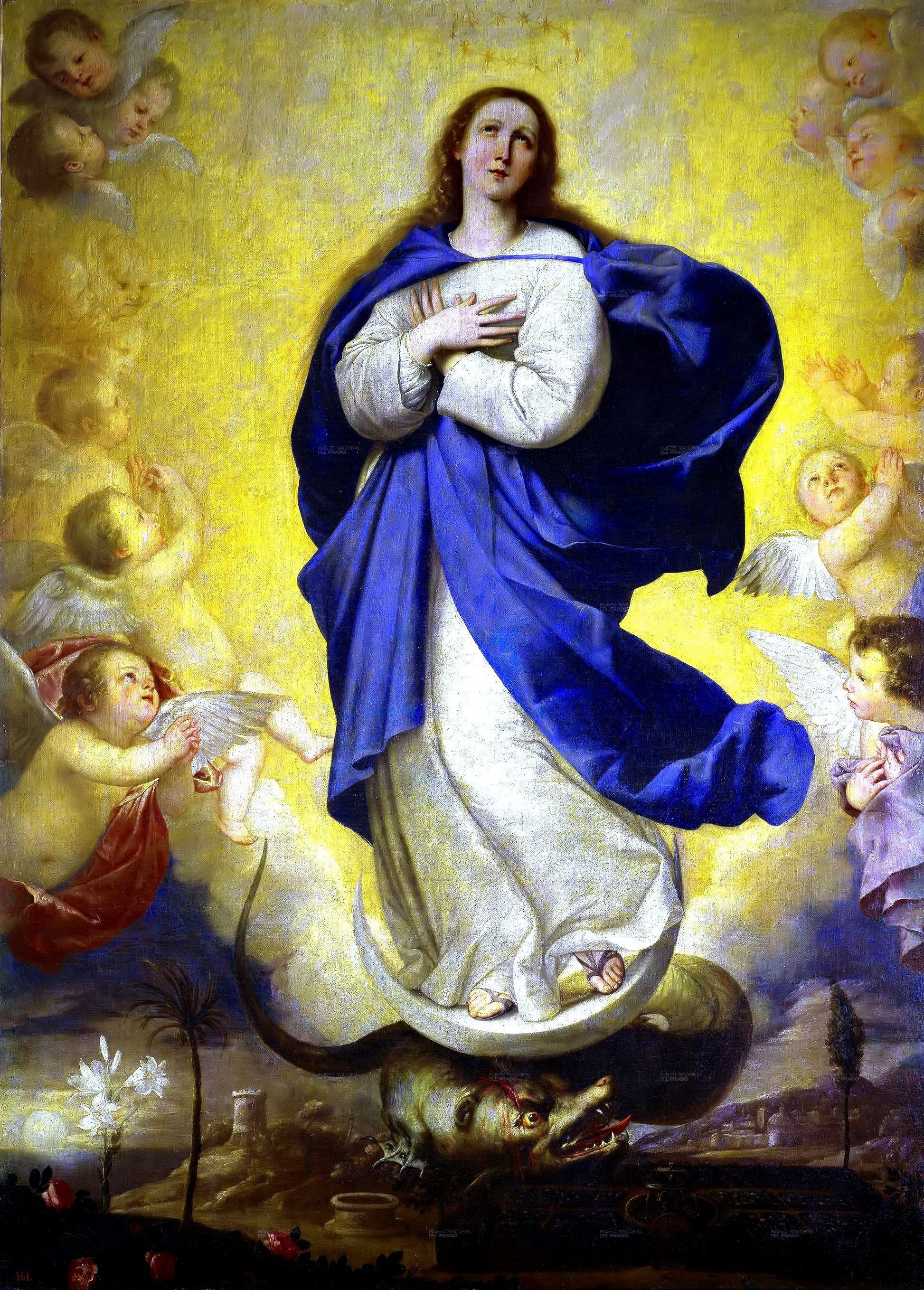
We often hear the stories of Jesus and His Blessed Mother. The stories are usually happy and uplifting. The road from the Annunciation to the crucifixion was not entirely smooth. Today the church recalls the seven sorrows of the Blessed Virgin Mary. So, my reflection covers her seven sorrows.
The first of Mary’s sorrows is Simeon's prophecy. After eight days, Joseph and Mary brought the baby Jesus to the temple for the rite of circumcision. Generally, this is a happy occasion for everyone except the baby. Forty days later, Jesus was brought to the temple to be presented to the Father in heaven. In addition to Mary, Joseph, and Jesus, the rabbi, Simeon, and Anna were present. The Holy Spirit had revealed to Simeon that he would not see death before he had seen the Lord’s Christ. Some visionaries have said that Simeon was Mary’s Rabbi in her youth, and Anna was her teacher.
This could explain how Simeon and Anna knew Mary. When Joseph, Mary, and Jesus entered the temple, Simeon took the child in his arms and said to Mary, “Behold, this child is destined for the rise and fall of many in Israel and to be a sign that will be contradicted, and you yourself a sword will pierce so that the thoughts of many may be revealed” (Luke 2:33-35). Anna also spoke of Him to all who were looking for the redemption of Jerusalem.
The second of Mary’s sorrows is their flight into Egypt. Mary and Joseph stayed in Bethlehem after Jesus' birth. The round trip to Nazareth is about 140 miles and would be very difficult for a woman who had just given birth and for the baby. Sometime after the presentation, the Magi visited the Holy Family at a house in Bethlehem and presented them with gifts of gold, frankincense, and myrrh.
In a dream, Joseph is warned that Herod intends to kill the baby, and that they need to flee to Egypt immediately. The timeline is unclear about when the dream occurred. Because Herod declared that every firstborn male child in Bethlehem under two years of age was to be killed, the flight to Egypt had to be within two years after Jesus’ birth. One can only imagine the sorrow Mary and Joseph felt, knowing what was going to happen in Bethlehem and that they could do nothing to stop it. The journey into Egypt was around 600 miles. As I was writing this, it occurred to me that the gifts of the Magi were very useful in funding the move to Egypt.
The third sorrow was losing Jesus for three days. The Holy Family had been in Jerusalem to celebrate the Feast of the Passover. One day into their journey back to Nazareth, they discovered Jesus was not with them. They assumed He was with other family members. Anyone who has ever discovered their child is missing goes into instant panic. A friend of mine had a missing young brother.
The family and the neighbors were all outside looking for the child. They had notified the police about the missing child. Your mind automatically begins to worry about a kidnapping or drowning in the local canal. You can only imagine their relief when they discovered he had fallen asleep under one of their beds.
For Mary and Joseph, they were a full day of travel away from where they last saw their son. The anxiety during the trip back to Jerusalem must have been excruciating. God gave Mary and Joseph the task of raising Jesus, and now they had lost Him. As we all know, they finally found Jesus in the Temple debating scripture with others.
The fourth sorrow was Jesus carrying the cross. His mother was watching her brutally beaten son, disfigured, bleeding, and stumbling under the weight of the cross as He walked up the hill to His execution. Mary was with Him throughout His passion. She felt each lash of the Roman whip in her heart. She saw Him beaten and mocked while they drove a crown of thorns onto His scalp.
The fifth sorrow was the crucifixion of her son. Words cannot express what she must have felt as they drove nails into His hands and feet, lifted the cross, and dropped it into a hole in the ground. Despite all that Jesus had suffered, He still spoke to His mother and John. He told John to take Mary as his mother and Mary to take John as her son. Mary and John stayed together as mother and son until Mary’s death. After Jesus had died, a lance was thrust into His side to ensure His death. As Simeon had foretold, Mary felt as though the lance had pierced her own heart.
The sixth sorrow was Jesus taken down from the cross. She now could hold her Son and cry inconsolably. She suffered with Him in all the suffering Jesus endured. We all suffer when we see our children suffering. How much more can anyone suffer than she suffered?
The seventh sorrow: Jesus was laid in the tomb. We know that Mary was at the tomb along with Mary Magdalen and Mary, the mother of James. We do not know where she went after the tomb was sealed. Some speculate that she went to console the apostles. On Sunday morning, Mary Magdalen and some other women came to the tomb; Mary, the mother of Jesus, was not there. Some speculate that Jesus had appeared to her earlier that morning. It is a lovely thought, and certainly, if He was to appear to anyone first, it would be His mom.
The first reading from Corinthians has a line that states, “Some people God has designated in the church to be first…” Micah prophesied the coming of the Messiah in Bethlehem. He then goes on to say, “Therefore he shall give them up until she who has labor pains has brought forth; then the rest of his brethren shall return to the sons of Israel.”
The she in this verse refers to Jesus’ mother giving birth. Mary was a special part of the plan of salvation. Like her, we are also a part of that endeavor. We are all individually a part of the body of Christ. We all have special gifts that play a role in God’s plan. We may not heal people or perform great miracles, but we have friends and family. As men, we are entrusted to lead in practicing our faith and to encourage others to follow our Savior, Jesus Christ.
The responsorial of the psalm says we are the sheep of his flock. What good is a shepherd without sheep, and what happens to the sheep without a shepherd? We, men, need to shepherd those who drift away from their faith. Mary was the apostles' stepmother. When the Spirit of the Lord descended upon the apostles, she was there, consoling them. She could have drifted off into the sunset and mourned the horrible loss of her son, but she didn’t because she still had work to do.
As Jesus was dying on the cross, Jesus told Mary to behold her son. Then He said to John Behold your mother. In doing this, she became the mother figure to all the apostles and disciples. In turn, she became the mother for all humanity. Not only do we have a daddy in Heaven, but we also have a mommy.