


The sinner’s lament is answered by the saint’s plea, because the sinner is he or she who becomes a saint. This is an important issue for Catholics — despite their holiness, the saints were human and capable of failure. The grace, mercy, and forgiveness of God led to their forgiveness.
Tuesday of the Third Week of Easter
Acts 7:51—8:1a
John 6:35ab
St. Luke, who wrote the book of Acts, was likely mentored by St. Paul. The very same St. Paul that used to be Saul and audienced — with some sense of pride and certainly with his approval — the martyrdom of St. Stephen.
How do we know this? Because Luke wrote about it in the book of Acts. Paul (Saul) knew St. Stephen, and applauded his death. Luke knew Paul well and interviewed him for the Book of Acts. Imagine the conversation, after Paul’s conversion, when Luke must have whispered to Paul. “Uh, what were you thinking?”
“Well, Luke, the rumors are true,” Paul might have said to Luke. “I’m the self-same murderer of Christians that is now an apostle of the risen Christ.”
Can you see Luke holding text in his hand, and worriedly asking, “Well, I’ve written the account as you confirmed it, Paul. Are you sure you want me to publish this?” He handed it to Paul, who read it out loud.
The witnesses laid down their cloaks
at the feet of a young man named Saul.
As they were stoning Stephen, he called out,
“Lord Jesus, receive my spirit.”
Then he fell to his knees and cried out in a loud voice,
“Lord, do not hold this sin against them”;
and when he said this, he fell asleep.
Now Saul was consenting to his execution.
Paul surely paused for a bit, scratching his forehead, and might have said, “It sounds a lot worse when you write it down.”

Imagine Peter and Thomas standing nearby. They had been privy to Luke’s hankering for details. They may even have reviewed Luke's report on Stephen’s speech and death. Would Thomas have spoken up first? “Paul, John convinced me an honest portrayal of my insolence and doubt was important. Everyone else left me alone, but I think John’s got the goods on me. You should take it like a man, Paul.”
“Yeah, I’ve heard about that,” admitted Paul, “but my transgressions are a lot worse. Criminey.” Everyone certainly nodded in agreement.
“Yes, but look at the embarrassment of my cowardice,” Peter might have piped up. “For goodness sake, Paul. I’ve looked the fool, and the traitor! Matthew and that fellow Mark have been writing about me. They even bring up the fine details about me sitting by the fire. Sheesh. I don’t imagine that Luke, or John would hold back, now that everyone knows my faux pas.”
“OK, then,” Luke might have said, meekly shrugging his shoulders, “I’ve messed up, too,” though he assuredly didn’t think anything he did was akin to murder. The silence went on a bit too long. Luke broke the chill with, “Remember, though. Stephen said it best: ‘Lord, do not hold this sin against them.’”
Enough of that.
The sinner’s lament is answered by the saint’s plea, because the sinner is he or she who becomes a saint. This is an important issue for Catholics — despite their holiness, the saints were human and capable of failure. The grace and mercy of God led to their forgiveness.
That’s not the important part, though. God’s grace and mercy are ‘necessary’ for us to become saints. Failures do not deny a person’s sanctity. They are required steps toward a growing and eventual total submission to the love of God.
St. Stephen identified the battle we undergo in that submission as a refusal to follow the leading and promptings from the Holy Spirit. “You stiff-necked people, uncircumcised in heart and ears, you always oppose the Holy Spirit …” He’s harsh, but hey, they were holding stones in their hands. Stephen’s lashing out is not a condemnation. He knew their bullheaded natures could still result in an awakening. His murder would have reverberations.
How, though, are we to know what the Spirit wants? That’s not an easy question to answer, but it is a vital one to solve. We begin by focusing on God and not our own calculations. Set aside all the noise coming at us from those who are not listening to the Holy Spirit. You can tell who they are. They are handing us stones to throw at the person who is submitting to the word of God. Translate “stone” for any weapon, including insults, lies, and defamation, as well as guns and rifles.
Stephen doesn’t give us much wiggle room regarding the promptings of the Holy Spirit. He said, “You received the law as transmitted by angels, but you did not observe it.”
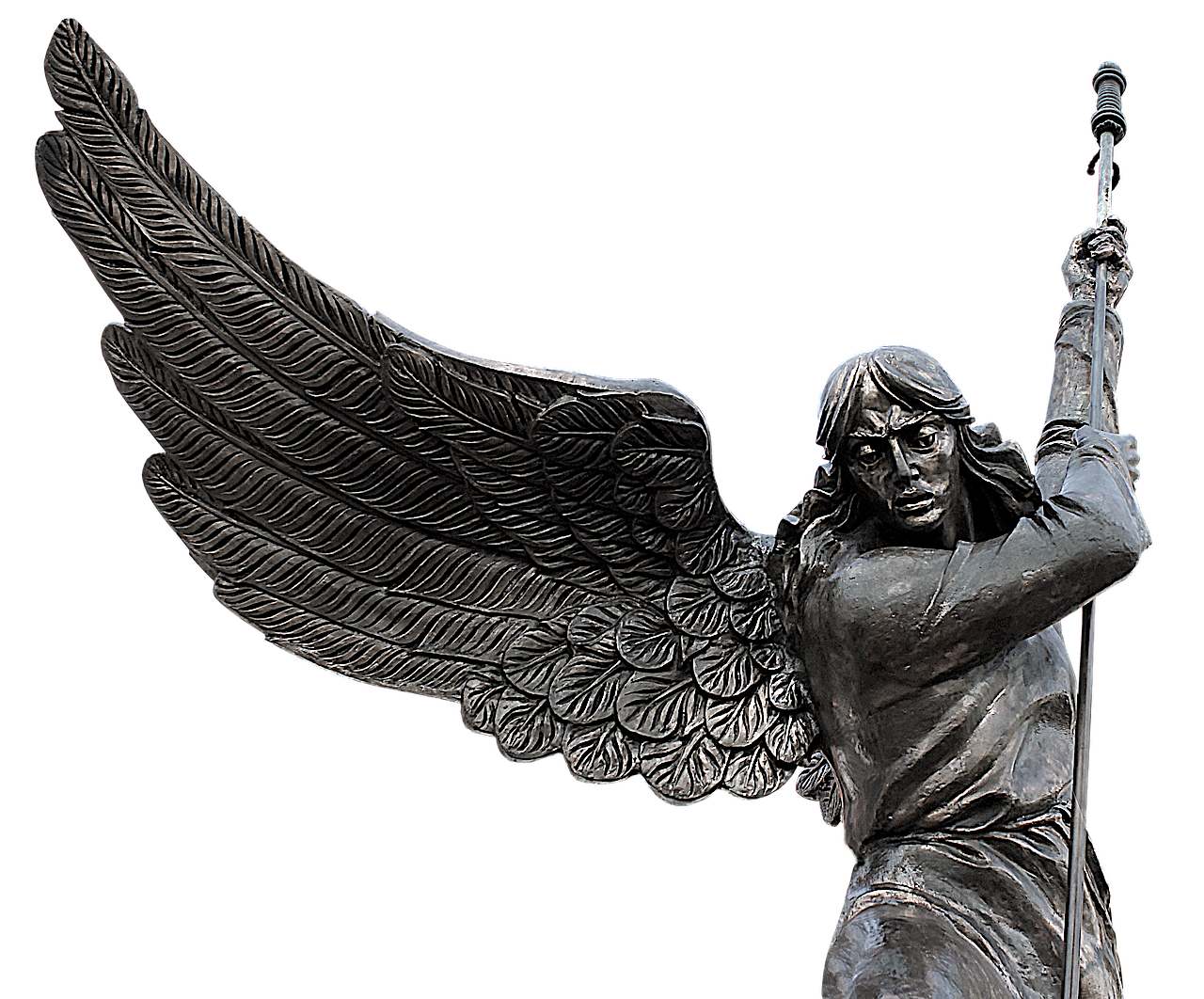
His introduction of angels speaks of God’s breadth of communication methods. Angels don’t seem to be an acceptable, modern method of God speaking to us. But consider all that God does to help us understand that, in our failures, he fights to offer us an eternal relationship with him, rather than the short-sighted mob mentality, deviants, and selfish options marketed as desirable options. The presence of evil spirits is actually proof that angels exist.
Angels prod us, in the same vein as they spoke to the prophets, to Mary and Joseph, to Mary Magdalene at the tomb, and so many other places in scripture. The overarching point about the angelic realm is that God created innumerable, unimaginable ways for us to know him, including through creatures beyond our cosmic boundaries. The great lengths he’ll go to, not just to get our attention, but to draw us to him. To make us his sons and daughters, his friends, and his compatriots in missions he’s designed specifically for us.
He allows the experience of pain, poor choices, and even ignoring him, so that we know the difference between true joy, glory, and forgiveness and the degenerate results of ungodly behavior. It’s a bizarre reality that ugliness sends us running into his arms, but God knows what he is doing.
In addition to his Holy Spirit dwelling inside of us, which we must willingly allow or the Spirit will not enter our hearts; and, in addition to the Father who has also put into our hearts the notion of right and wrong and the love of us that no other creature can match, which we can accept or reject; and, in addition to the friendship, kinship, and leadership provided to us by Jesus Christ, whom we can ignore for other friendships; God also provides us with angelic personages to assist us in accepting God in so many ways. Do we reject the angels, too?
What else must God orchestrate for us? Miracles? OK, he does that. Change our very DNA, our spiritual makeup, with the Eucharist? Check, he does that. Give us the Church, stewards of the truth that dates back to the results of three years of ministry and confirmed at Pentecost? Yes, he did that too. Leave a written word, compiled by authors compelled to communicate the truth for all of history. Check, check, check, and check.
There is a tragedy in our misuse of all that God does for us, and that is our more ready willingness to sin. Acts tells us that Stephen gave the speech that led to his death, “to the people, the elders, and the scribes.” No one is left out in their complicity with Stephen’s murder. It’s surely at Saul’s behest, and the anger of those he seemed to condemn, but the stones were thrown by those whom Stephen called “just like your ancestors. Which of the prophets did your ancestors not persecute? They put to death those who foretold the coming of the righteous one …”
In John’s gospel, he writes in chapter six, “The crowd said to Jesus: “What sign can you do, that we may see and believe in you?” Jesus referenced their example of God’s manna miracle in the desert, “the bread of God is that which comes down from heaven and gives life to the world.”
So they said to Jesus,
“Sir, give us this bread always.”
Jesus said to them, “I am the bread of life;
whoever comes to me will never hunger,
and whoever believes in me will never thirst.”
Each of us hears what we are willing to hear.
Drop the stones.