

By Tim Trainor
Why do Catholics call Mary the “Untier of Knots”? The Theological answer is: In the 2nd century, the early Church Father Saint Irenaeus of Lyons wrote that what Eve “bound” by her disbelief, the Virgin Mary loosened by her faith. Thereby, her obedience to God untangled the “knot” of disobedience created by Eve in the Garden of Eden.
Feast of the Nativity of the Blessed Virgin Mary
Micah 5:1-4a
Matthew 1:18-23
We usually do not celebrate the birthday of a Saint, but rather their “birth into heaven,” as the anniversary of their death is considered the beginning of their blessed life with God. Nevertheless, there are three exceptions to this Church rule: Jesus the Christ Child, Saint John the Baptist, and the Blessed Virgin Mary. For these three, the Church celebrates both their nativity and the special impact of their coming to earth on that day.
Again, the Church celebrates only three birthdays on its liturgical calendar: the Nativity of Our Lord (December 25), the Nativity of His Forerunner, John the Baptist (June 24), and the Nativity of His Mother on September 8, which we are looking at today. Thus, the Church uniquely honors only these three principal figures as they, working together, are heavily involved in God’s Salvation Plan to undo the results of the fall of Adam and Eve recorded in Genesis.
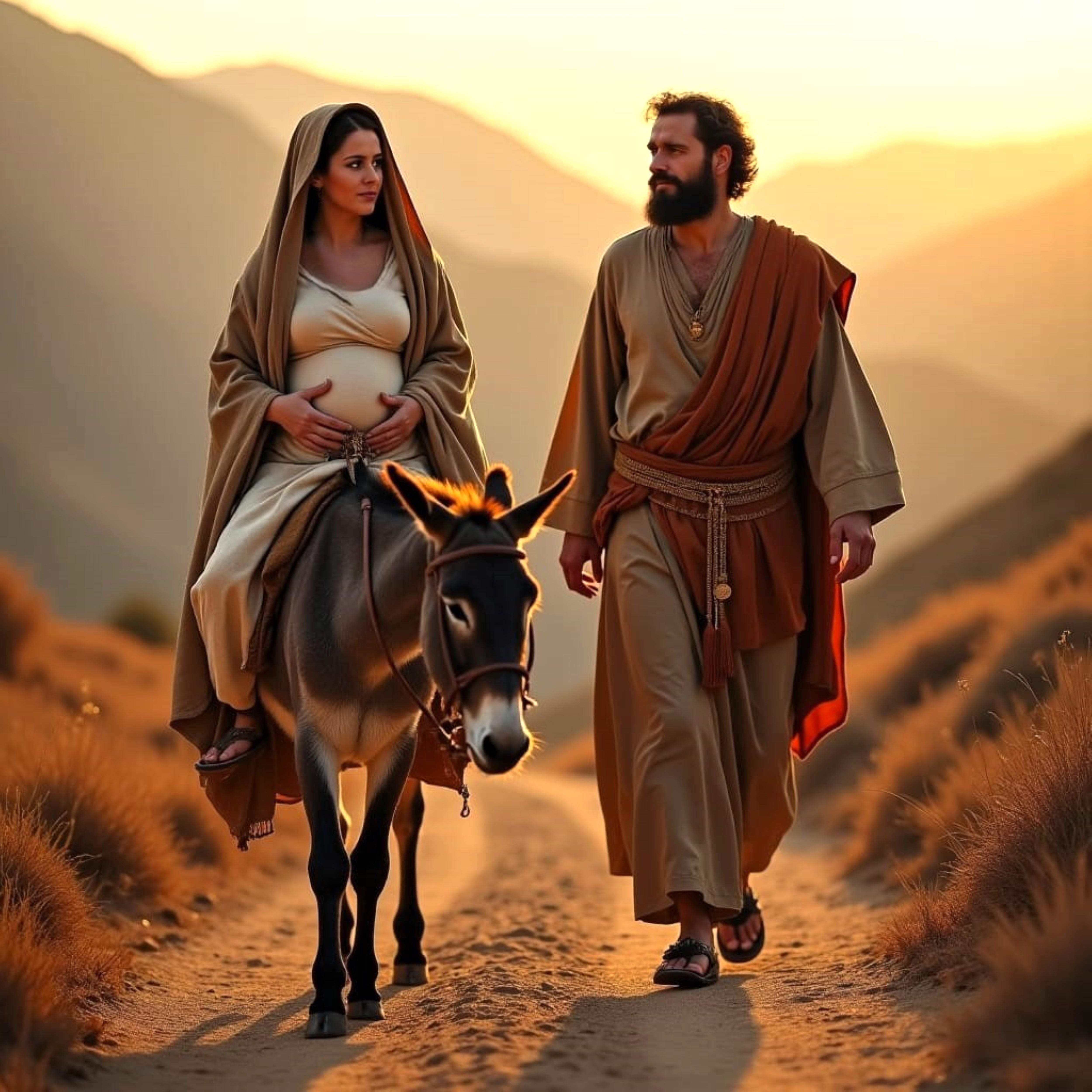
What are some of the specifics in the birth of Mary that are important and ought to impact the whole Church and us, you may ask (as I did), and are they authoritatively given somewhere? Well, yes. See paragraphs 452-511 in the Catechism of the Catholic Church, which is dotted with Biblical and Church Magisterium-type references. The 3 paragraphs that summarized for me why Mary’s birthday is important dealt with the vital role she played in salvation history.
First, paragraph 489 states: ‘Throughout the Old Covenant the mission of many holy women prepared for the mission of Mary. At the very beginning there was Eve; despite her disobedience, she receives the promise of a posterity that will be victorious over the evil one, as well as the promise that she will be the mother of all the living. By virtue of this promise, Sarah conceives a son in spite of her old age. Against all human expectation, God chooses those who were considered powerless and weak to show forth His faithfulness to His promises: to Hannah, the mother of Samuel, then Deborah, and many other women. [But,] Mary “stands out among the poor and humble of the Lord, who confidently hope for and receive salvation from Him. After a long period of waiting, the times are fulfilled in her [Mary], the exalted Daughter of Sion, and the new plan of salvation is established.’
Next, para 505 states: ‘By His virginal conception, Jesus, the New Adam, ushers in the new birth of children adopted in the Holy Spirit through faith. “How can this be [Mary said]”? (Lk 1:34) Participation in the divine life arises “not of blood nor of the will of the flesh nor of the will of man, but of God” (Jn 1:13). The acceptance of this life is virginal because it is entirely the Spirit’s gift to man. The spousal character of the human vocation in relation to God (2 Cor1:12) is fulfilled perfectly (or completely) in Mary’s virginal motherhood.’
And paragraph 511, which reads: ‘The Virgin Mary co-operated through free faith and obedience in human salvation. She uttered her yes “in the name of all human nature” (St. Thomas Aquinas). By her obedience she became the new Eve, mother of the living.’
Mary was conceived and born in the normal way; however, having been justified at her conception (see para. 490, where we read about the Immaculate Conception), rather than in the womb as John the Baptist was (see Luke 1:41), or by Baptism, as we each are, she was born ‘full of grace’ (per Luke 1:28). In this gift of God she grew by her cooperation without sinning to the end of her life.
The Church celebrates Mary’s birthday on September 8. This feast day is exactly nine months after the Solemnity of the Immaculate Conception on December 8. The Church makes no claims as to the historical merit of either date. Rather, the dating serves a liturgical purpose: to recall the mysteries associated with Mary, in the same way the nine months on the calendar between the Annunciation and Christmas do.
Moving on, did you know that the Bible contains two (2) different versions of Jesus’ genealogy? Matthew’s, which we saw this morning, but Luke also has another in 3:23-38. Luke starts with Jesus and moves backward in time, tracing His family from Jesus back to Adam and God. He did this to stress Jesus’ divine sonship. Whereas Matthew’s version, discussed below, instead starts with Abraham and proceeds through generations, following family lines to Jesus to stress a linkage to King David.
To fully understand the differences between Matthew’s and Luke’s accounts of Jesus Christ’s genealogy, it’s important to understand the history, culture, and context surrounding the decisions these two writers made. Jesus Christ’s descent can also be traced through 2 of David’s family lines.
Matthew’s account was primarily intended for Jewish readers. Scholars believe Matthew therefore focused on legal inheritance, which would also be the line used to trace kings and royalty. As a result, Matthew includes several adoptive names in his list. This approach further underwrites the idea that Jesus Christ was the rightful heir to King David’s throne.
Matthew also includes generations in groups of 14. Hebrew genealogy often left out some generations in favor of symbolic numbers. The same practice is seen in other books of the Bible. In Hebrew, each letter has a numerical value. The Hebrew letters of David’s name add up to 14, so the number 14 came to represent David’s line. By including 14 generations from Abraham to David and then 28 generations from David to Jesus, Matthew taught his Jewish audience that Christ was David’s legal descendant, thus “proving” that He was the son of David prophesied in the Old Testament, as in our first reading this morning from the book of the Prophet Micah.
Luke took a different approach. He wrote a story for a wider audience, including Gentiles and Jews alike. He started his story off with how Christ was born, and only then, after three chapters of background and lastly relating His baptism in the Jordan River and the descent of the Holy Spirit, does he begin to give us Jesus’ genealogy. He starts off with Christ himself and works his way back not only to David and Abraham, but to Adam and God. Luke’s claim to the general populace was that Jesus is the Son of God, miraculously here as a Savior to all God’s children.
One more thing about Mary. Why do Catholics call Mary the “Untier of Knots”? The Theological answer is: In the 2nd century, the early Church Father Saint Irenaeus of Lyons wrote that what Eve “bound” by her disbelief, the Virgin Mary loosened by her faith. Thereby, her obedience to God untangled the “knot” of disobedience created by Eve in the Garden of Eden.
Specifically, this concept of Mary untying knots comes from a lengthy work by Saint Irenaeus, entitled Adversus haereses (Against Heresies). In Book III, Chapter 22, he presents a parallel between Eve and Mary, describing how “the knot of Eve’s disobedience was loosed by the obedience of Mary. For the knot the virgin Eve had bound fast through disobedience, another virgin, Mary, set free through her faith.” Also, see Luke 1:28, where the Angel Gabriel says to Mary: ‘Hail, full of grace, the Lord is with you’.
FYI – Catholic tradition views the grammatical form “full of grace” as a permanent state of being filled with GOD’s grace, with no original sin and divine life, sin-free, unlike Eve.
Lastly, who were the parents of the Virgin Mary? My limited research concluded that Saints Joachim and Anne are believed to be her parents. Are they in the Bible, you may ask? And the answer is: It is probable because Joachim is indirectly named in Luke’s version of the genealogy of Jesus. Here we find the name “Heli”, which is a short form of Eliachim or Jehoachim. This, plus the fact that the names “Joachim” and “Anne” both appear in a 2nd century apocryphal work ”the Protoevangelium of James,” as her parents, which was written around 120 A.D., less than 60 years after the end of Mary’s earthly life, I believe, supports this conclusion (also see the Catholic Answers website).
Lastly, did you know that Saints Joachim and Anne are the patron saints of Grandparents? I use that fact often.
I’d like to end with a prayer written by the late Pope Francis entitled:
Mary - Undoer of Knots
‘Through your grace [Mary], your intercession, and your example, deliver us from all evil, Our Lady, and untie the knots that prevent us from being united with God, so that we, free from sin and error, may find Him [God] in all things, may have our hearts focused on Him, and may serve Him always in our brothers and sisters. Amen’