


By Steve Hall
“What eye has not seen? And what ear has not heard? And what divine marvels have not entered the human heart? So as to give us the power to recognize, when that time comes, what God has prepared for those who love him.”
Tuesday of the Sixth Week in Ordinary Time
James 1:12-18
Mark 8:14-21
As we read this Gospel incident recorded by Mark, The Leaven of the Pharisees, we encounter one of several situations in which the disciples’ misunderstanding is revealed. As the story begins, you can almost see the finger-pointing as the source of the bread problem is being sought out. Whether the suggestion of a dispute is a true interpretation or not, the discussion certainly registered with Jesus, and he questions where they have directed their attention. As Mark makes clear, the disciples were focused on their own earthly problems and forgetful of how Jesus himself had resolved such human matters in the past.
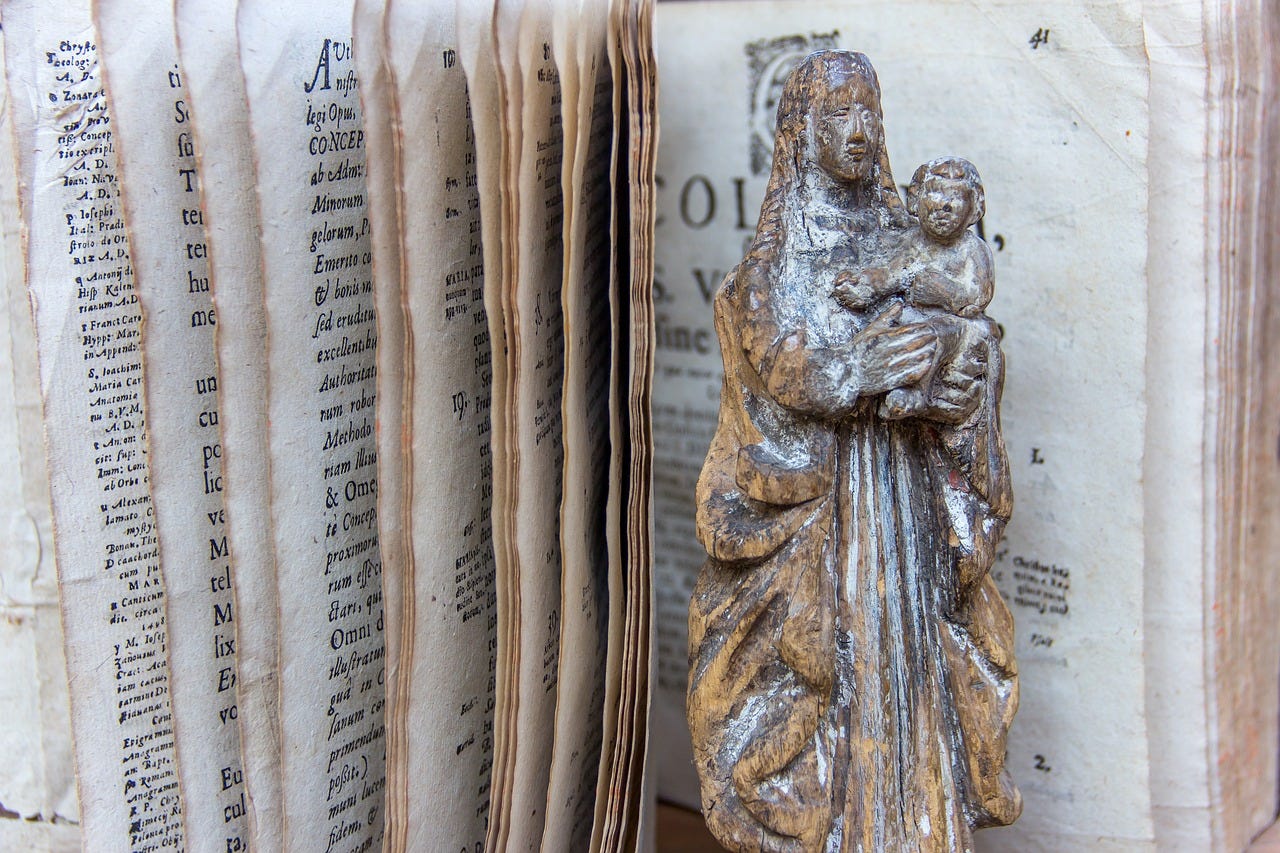
Before this Tuesday's Gospel reading, my own attention had been directed to the second reading from last Sunday’s liturgy. There we heard a well-known verse from Paul’s letter to the Corinthians: “What eye has not seen, and ear has not heard, and what has not entered the human heart, what God has prepared for those who love him.” The wording has always seemed a bit awkward to me, but a re-phrase might go something like this: “No man’s eye has ever seen, no man’s ear has ever heard, and no man’s heart has ever experienced what God has prepared for those who love him.”
I offer this paraphrase because last Sunday I initially heard something different. What I heard suggested an understanding that went like this: “What eye has not seen? And what ear has not heard? And what divine marvels have not entered the human heart? So as to give us the power to recognize, when that time comes, what God has prepared for those who love him.”
The common interpretation of Paul’s teaching looks to the inadequacy of either human experience or imagination as foundations for grasping what comes in the next life. When that same teaching is posed as a series of questions, everything changes.
Novels that explore the experience of mankind as it moves into an unknown future seem, by and large, to lean toward warning and potential destruction. It’s easier to find novels like Brave New World (Aldous Huxley), Animal Farm (George Orwell), A Canticle for Leibowitz (Walter M. Miller, Jr), or The Road (Cormac McCarthy) than to find those of celebration.
But poetry and song tend toward a different perspective. William Wordsworth titled his poem well when he wrote Ode: Intimations of Immortality from Recollections of Early Childhood. In it, he suggests that the way the world appears to children is a hint that every human soul comes from heaven and will return there one day. Here’s a small portion.
In a thousand valleys far and wide,
                      Fresh flowers; while the sun shines warm,
And the Babe leaps up on his Mother’s arm:—
                      I hear, I hear, with joy I hear!
                      —But there’s a Tree, of many, one,
A single field which I have looked upon,
Both of them speak of something that is gone;
                      The Pansy at my feet
                      Doth the same tale repeat:
Whither is fled the visionary gleam?
Where is it now, the glory and the dream?
What eye has not seen? And what ear has not heard?
We all know it — that sensation of Flying Without Wings
(song by Westlife)
At least once in life, most would say, “I’m trying to hold my breath, let it stay this way.” (Opening words to Never Enough from The Greatest Showman)
Our desire is for the complete fulfillment of promise — the “Blind will see, the lame will walk, the dead will live again.” (from the song “Mary Did You Know?” But also from Isaiah 35:5)
We struggle, and we Dream the Impossible Dream (title and opening words from a song in The Man From LaMancha).
And the dream is common, even among pop musicians. This particular hope-in-song was introduced in 1968 by a young Elvis Presley.
There must be lights burning brighter, somewhere
Got to be birds flying higher in a sky more blue
If I can dream of a better land
Where all my brothers walk hand in hand
Tell me why, oh why, oh why can’t my dream come true?
Oh, why?
There must be peace and understanding sometime
Strong winds of promise that will blow away the doubt and fear
If I can dream of a warmer sun
Where hope keeps shining on everyone
Tell me why, oh why, oh why won’t that sun appear?
“Why,” he asks. Because the Son has appeared, and we are disciples in a boat, giving Him our superficial attention. We still ask, as did the students in the musical Les Miz: in Beyond the barricade:
Is there a world you long to see?
And just like those students we still live with our own intimations of immortality.
From the table in the corner
They could see a world reborn
And they rose, with voices ringing
And I can hear them now!
The very words that they had sung
Became their last communion
We desire. We hope. We pray for:
A world where pain and sorrow will be ended
And every heart that’s broken will be mended
And we’ll remember we’re all God’s children
Reaching out to touch him
Reaching to the sky
(The Prayer song)
These contemporary expressions are evidence that we have seen, we have heard, we have inherent intimations that there is something more, and we sense what it will be like. But surprisingly, if we examine these same texts closely, we might think they are written or sung by an Old Testament people. These hopes, desires, longings are found time after time in the Scriptures — but exclusively in the Books written before Christ.
And while the desires of those days — the desire for justice, beauty, truth, peace, love, and the conquest of suffering, sorrow, and want — were nailed to an anticipated Messiah, that nailed Messiah has now come. One might, for example, think that one of those in the boat was named Malthus or Sanger, distracted by a concern about overpopulation that would eventually overwhelm the food supply and natural resources.
“What eye has not seen? And what ear has not heard? And what divine marvels have not entered the human heart? So as to recognize, when that time comes, what God has prepared for those who love him.” We’ve been given a glimpse of what is to come, but like the disciples, we sit in the boat and dispute mundane matters which God himself has shown a readiness to resolve.
A verse or incident from the Scriptures grabs our attention, and we run with it — ignoring the whole from which it was taken. We hear “feed the hungry,” and we are moved. We hear “if a man doesn’t work, he should not eat,” and we find it offensive. Is one verse the Word of God but not the other? Do parts of Scripture have only second-class inspiration? Obviously, NO!
G. K. Chesterton, the great British apologist of the last century, spoke more than once about how only Christianity had successfully addressed apparent conflicts simultaneously: suffering vs. salvation, life vs. death, suffering servant vs. conquering warrior, riches vs. wealth, and so on. Only in the whole of Scripture is truth to be found. Select lines and verses, and stories can be misappropriated and misleading. Yet, how often is a single line considered an adequate guide?
Our desires, our dreams, our hopes find their origin in the fact that we have been infused with that glimpse of a reality that can be ours. But we have to look beyond to find it realized. We sit in the boat. We argue about peace when we have not found our own internal peace. We argue for enough bread as the source of bread stands before us. We dream of a better land, one with peace and understanding, as division (created by the ‘other,’ of course) sits ever more firmly in our psyche.
Meanwhile … meanwhile … we’re poker players; and we’re at the table with a small pile of chips while simultaneously holding a royal flush. Yet we’re afraid to say “All In.” Are we so in doubt of what we have seen and what we have heard?
Do we still not understand?