


The criteria for designating a 1st Century saint usually begin with martyrdom, followed by records of a personal association with Jesus and a courageous act in defense of Jesus, the Church, or the apostolic community. In a sense, Nicodemus qualified for all four.
Tuesday of the Second Week of Easter
Acts 4:32-37
John 3:7-15
It’s very likely that the first St. Nick was not St. Nicholas, the 4th-century Greek bishop and precursor to our two-century-old Santa Claus personality. Rather, the inquisitive, practical Pharisee, Nicodemus, might be called our first St. Nick.
The two saintly men, however, are similar to us in legendary status. Yet while traditions and myths surround St. Nicholas, we know little of Nicodemus beyond what is found in scripture. (That, however, means everything!)
As icons, they have been discussed and studied for centuries. Both men were from wealthy backgrounds, looked up to by their peers, and landed in the hallway of legendary Christians. We imagine them as icons, but while St. Nicholas became a patron saint of everything from toymakers to sailors (a list citing 20 different patronages), St. Nicodemus has no formal patron identification. None.
It seems an odd status for a famous saint, but not uncommon for a saint’s bench behind the big names. Instead, Nicodemus is known for his close relationship with Jesus, as proof that Jesus associated with the elite Pharisee community. The idyllic notion that Jesus only accompanied the poor and the diseased falls apart under the scriptural recognition of his affiliations with military Romans, the wealthy, and the Jewish hierarchy. Nicodemus opens theology to a broad-minded incarnated God.
Nicodemus, and likely many other Jewish leaders, were moved by Jesus’ teaching and his miracles. Nicodemus was ultimately convinced, as revealed in scripture, a man primed for sainthood.
Within the first five centuries of the Church, the practice of declaring saints shifted from popular acclamation to a more detailed process. The first saints were identified from a mix of Christ and apostolic credentials, especially when supported by scriptural records and nods from Church Fathers. The process was not formal. Historians note that the early saints were named by both God and the people (vox Dei and vox populi).
By the time of St. Nicholas, vox populi would build a “cult” around someone to be named a saint. Next, a bishop must name, decree, and then declare a person a saint. Folks from a Catholic community would request a formal decree of sainthood, then the pastor would approach the bishop. A biography and records of the person’s death were required. In most cases, remains (relics) were provided.
Martyrdom was, and still is, the common qualifier. Over time, confirming martyrdom required an appointed, dedicated body to conduct more rigorous investigations among a larger body of witnesses. By the 10th Century, a declaration went further — a papal acclamation.
The status of Nicodemus’ sainthood falls into the earliest of processes. Scripture told the story. He was also likely martyred because, according to the Catholic Encyclopedia, his relics were discovered along with those of Stephen, the first saint; Gamaliel (the revered teacher of St. Paul); and Saint Abibas (a son of Gamaliel). All four were declared martyrs.
The criteria for designating a 1st Century saint usually begin with martyrdom, followed by records of a personal association with Jesus and a courageous act in defense of Jesus, the Church, or the apostolic community. In a sense, Nicodemus qualified for all four.
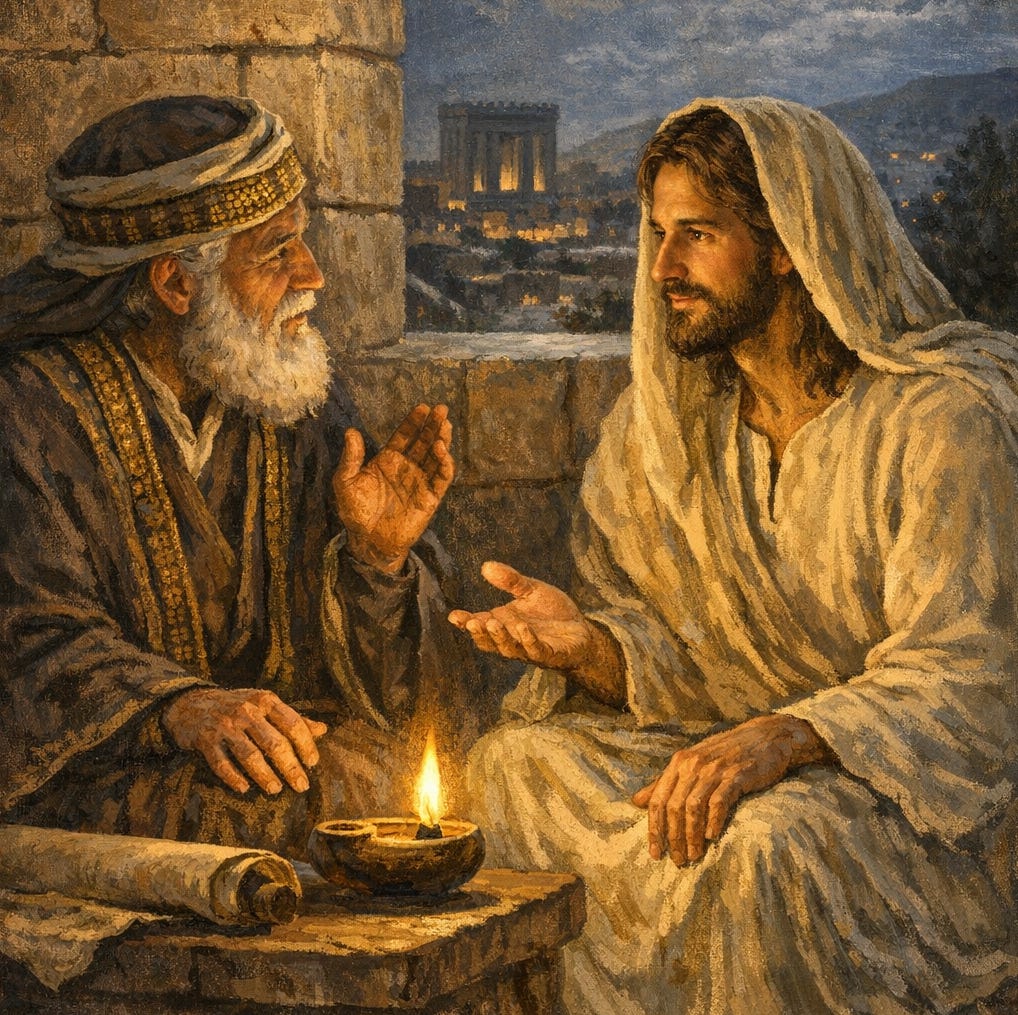
Besides being Jesus' debating partner during a nighttime escapade (John 3:1-21), Nicodemus defended Jesus at the Sanhedrin (John 7:50-52). Most lovely, however, was his assistance with Saint Joseph of Arimathea at the preparation of Jesus’ body in Joseph’s tomb (John 19:38-42).
Nicodemus has been honored in poetry, artwork, and tales over two millennia. He’s been portrayed in movies, Christian television series, and on the radio.
A website called Saint for a Minute describes Nicodemus’ impact. “While he does not have a specific patronage assigned to him, his life serves as an inspiration to all who seek to follow Christ faithfully and boldly. Saint Nicodemus’ story is one of courage, faith, and a willingness to stand up for what is right. His secret discipleship, nocturnal meetings with Jesus, and defense of Christ’s rights showcase his unwavering commitment to the truth. May Saint Nicodemus inspire us to be bold in our faith and unyielding in our pursuit of justice.”