

By Tim Trainor
In summary, Jesus is acting as an intercessor, praying for His disciples and for all believers, present and future. He asks that they be protected by the power of God and that their unity resemble the intimate union shared by the Father and the Son. Eternal life is an intimate knowing of the only true God and His Son, Jesus Christ. Not just knowledge about God, but knowing Him, being in a personal relationship with God beginning here and now.
Tuesday of the Seventh Week of Easter
Acts 20:17-27
John 17:1-11a
Our Gospel Reading this past Tuesday is from John Chapter 17: 1-11, known as the first part of Jesus’ High Priestly Prayer. The Prayer continues through to verse 26. It is His longest recorded prayer, and He said it at the end of the Last Supper, the final meal of His life.
Interestingly, ‘The Our Father Prayer’ is not found in John’s Gospel, but while Saint John omits this more famous ‘model’ prayer, he does record a longer, more formal one that the Church Fathers later used to refute early heresies.
Its highlights are: Jesus glorifies His Father, defines eternal life as knowing God, and prays for the protection and unity of his disciples. This Prayer emphasizes that Christians are not of the world, but we are sent by Jesus back out into it, and He urges His Father to give us unity and protection as we navigate our way through it.
Since the 16th century, this prayer has been known as the “High Priestly Prayer” of Jesus. Why did it come to be known as a “high priestly” type of prayer, you ask?
Well, two reasons. Hebrews 5: 7-10 answers the first part of this question: “During His life on earth, He [Jesus] offered up prayer and entreaty, with loud cries and with tears, to the one who had the power to save Him from death, and, winning a hearing by His reverence, He learnt obedience, Son though He was, through His sufferings; when He had been perfected, He became for all who obey Him the source of eternal salvation and was acclaimed by God with the title of high priest of the order of Melchizedek.”
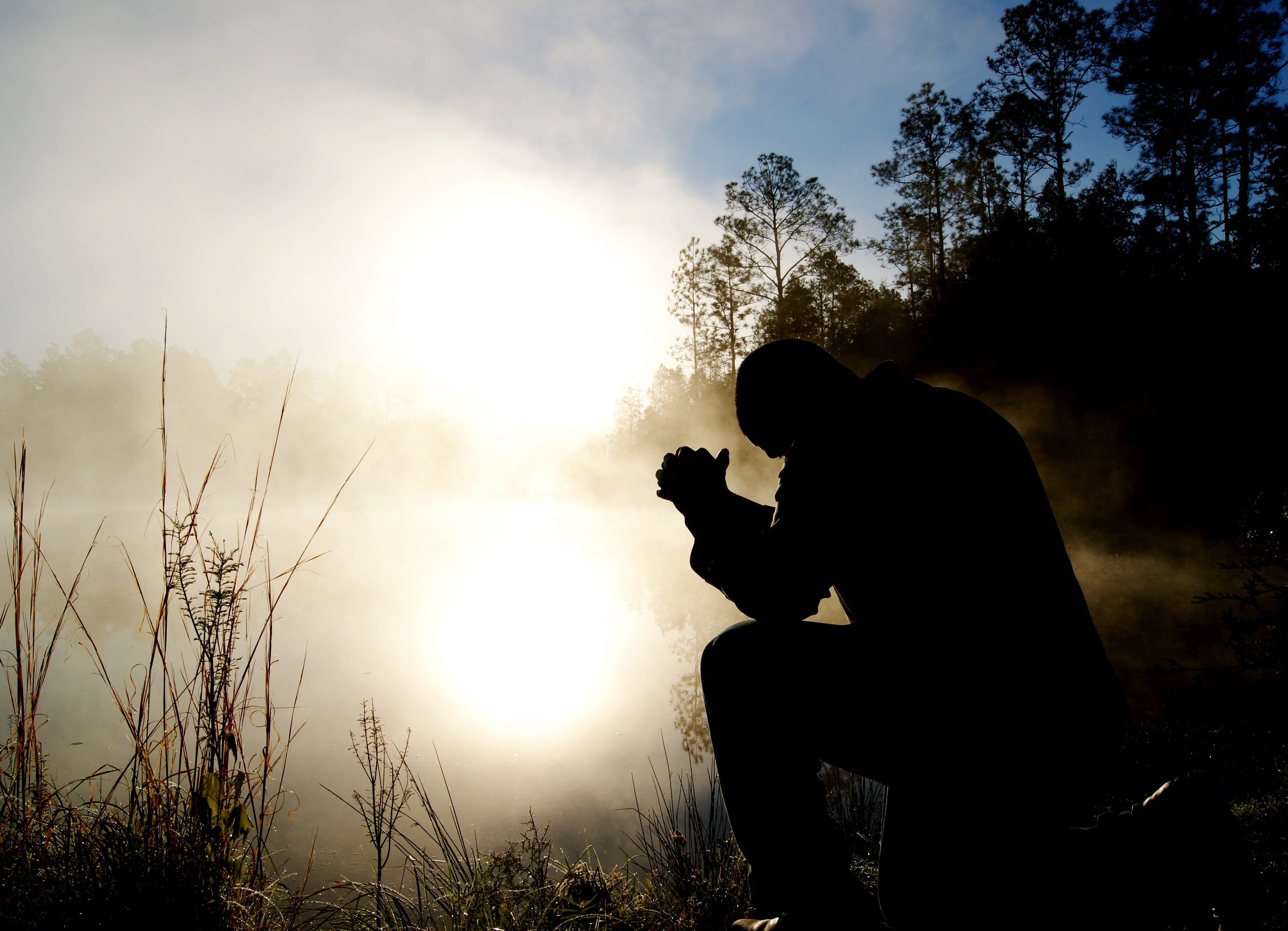
So, when 16th-century theologians later on studied it, noting the “order of Melchizedek” connection, they realized Jesus uses intercessory language throughout this prayer; they thus applied this “high priestly” tag or title to it. And so it has been ever since.
Returning to the Prayer. At this point in the farewell address, note that Jesus is speaking to the Father and not to the disciples; they are just listening in, so to speak.
In summary, He is acting as an intercessor, praying for them and for all believers, present and future. He asks that they be protected by the power of God and that their unity resemble the intimate union shared by the Father and the Son.
Some Key items I believe one should take away from this Prayer are that Jesus defines the upcoming “hour” of His passion not as a defeat, but as the moment to glorify the Father by completing His (Jesus’) work on earth. Next, and this is important, it’s not often that we get a straightforward definition of eternal life, but here it is: “And this is eternal life, that they may know You, the only true God, and Jesus Christ whom You have sent” (John 17:3).
How many times have we heard this depiction of eternal life? I would wager rarely, if at all. On this upcoming last Sunday of Easter, in the season of the resurrection, here is an idea about eternal life that just might stand out and mean something beyond an empty tomb — THAT ETERNAL LIFE IS — an intimate knowing of the only true God and His son, Jesus Christ! Not just knowledge about God, but knowing Him, being in a personal relationship with God beginning here and now.
I believe that our Gospel verses this morning fit in nicely with what we hear Saint Paul say in 1st Corinthians: “Eye has not seen, nor ear heard, nor the human heart conceived, what God has prepared for those who love him.” This aligns with our Gospel, where Jesus says, “to know you, the only true God, and Jesus Christ whom you have sent.” The knowing Jesus speaks of here is a knowing of the heart, not the head, the type of knowing that springs from a loving type of relationship! I hear Jesus suggesting that in eternal life we will be in a relationship of love with God the Father and Himself, and, as a result of this, we will truly get to know God and Jesus as they are, as love itself! Remember 1 John 4-8: “God is love.”
Again to quote Saint Paul, ”Now we see as in a mirror dimly, but then we will see face to face. Now I know only in part; then I will know fully, even as I have been fully known.” To me, Paul suggests here that the Lord knows us fully now, in this life, but only in eternal life will we come to know the Lord fully. We are not without some knowledge of the Lord in this life, however. As “We [now] know in part,” Paul says.
Then, Jesus prays passionately for the unity of his Disciples and later in John 17:20-21 (in a continuation beyond our reading) for all Christians when He says: “I pray not only for these [my current Disciples] but also for those who through their teaching will come to believe in Me [future Christians like you and me]. May they all be one, just as Father, You are in Me and I am in You, so that they also may be in Us, so that the world may believe it was You who sent Me.”
I love the fact that way-back-then, Jesus prays an intercessory prayer for all of us ’to-be believers down through the centuries’ that we may become one just “as We (that is: God and Jesus) are one” — a unity modeled on the very Trinity.
• When Jesus says “keep them in your name” (verse 11), Catholic tradition interprets this “name” reference as the seven profound “I AM” statements recorded in the Gospel of John made by Jesus. Statements like: “I am the bread of life” (John 6:35), “I am the light of the world” (John 8:12), or “I am the good Shepard” (John 10:11). All of which indicate His divine authority and the protection which He now passes on to the Disciples.
• Then He speaks to the Disciples’ security by affirming that while in the world, He guarded them, and now He entrusts them to the Father, highlighting the Church’s now ongoing reliance on the Holy Spirit’s divine protection.
• The last passage of our Gospel Reading, which is: “And now I will no longer be in the world, but they are in the world, while I am coming to you,” implies that Jesus recognizes that we Christians are currently being left to be in the world but are not to be part of it. Thus, He wills us to be set apart (consecrated) in truth, and carry on the mission of Christ as His Church and individual believers.
• And how are all my above speculations to be accomplished, you may ask? Your answer comes this Sunday with the Holy Spirit’s descent on Pentecost. I suggest that you attend Mass and listen up for more details on just how God intends to work all this out.
• Now on to some Catechism comments on our Gospel Reading for today. Did you know that there are 30 Catechism citations on this “high priestly” prayer? One of these 30 entitles our Gospel reading as: “The prayer of the hour of Jesus” (See CCC 2746). Why so, and what does that have to do with us preparing for Pentecost this weekend?
• Per the Catechism, our John 17 prayer: “Embraces the whole economy of creation and salvation, as well as his death and Resurrection”, and, “Fulfills, from within, the great petitions also found in the Lord’s Prayer: concern for the Father’s name; passionate zeal for his kingdom (glory); the accomplishment of the will of the Father, of his plan of salvation; and deliverance from evil” (CCC 2750). So it is worthy of attention
In closing, as mentioned earlier, this Sunday is Pentecost. One way to prepare to receive (or rekindle) the Holy Spirit at Pentecost is through prayer. That’s likely what the Apostles and Mary were doing between the days after the Ascension of the Lord, which we celebrated last Sunday, and this upcoming Pentecost Sunday.
Like them, I suggest we each spend some time before Pentecost in prayer and practice waiting in our spiritual lives. Waiting for the Holy Spirit by meditating on perhaps The Our Father Prayer (see Matthew 6:9-13), or more ambitiously, on the full High Priestly Prayer of Jesus (see John 17:1-26).
Some suggested Catechism of the Catholic Church readings are: paragraphs 217; 589; 730; 1085; 2746-51; 2812 & 2815 all of which are on Jesus’ “High Priestly Prayer.”